

When your pet is in distress, every minute matters. Knowing where to find a trusted emergency vet before a crisis strikes can mean the difference between life and death for your furry family member. With over 18,000 veterinary clinics listed on Pawgrades, pet parents across the United States can search for emergency and specialty veterinary providers, read real reviews, and prepare a plan long before an emergency happens. This guide walks you through everything you need to know about finding, evaluating, and visiting an emergency vet near you.
What Is an Emergency Vet?
An emergency veterinarian is a licensed animal doctor who provides immediate medical care for pets experiencing life-threatening or time-sensitive health crises. Unlike regular veterinary clinics that operate during standard business hours, emergency vet hospitals typically offer 24/7 services, including nights, weekends, and holidays.
These facilities are equipped with advanced diagnostic tools such as digital radiography, ultrasound, and in-house laboratories to deliver rapid diagnoses. The U.S. veterinary market was valued at $15.87 billion in 2024 and continues to grow, driven by rising pet ownership and increased demand for specialized services.
When Should You Visit an Emergency Vet?
Not every pet health concern requires an emergency visit, but some situations demand immediate attention. Recognizing the signs can save your pet's life.
Life-Threatening Symptoms
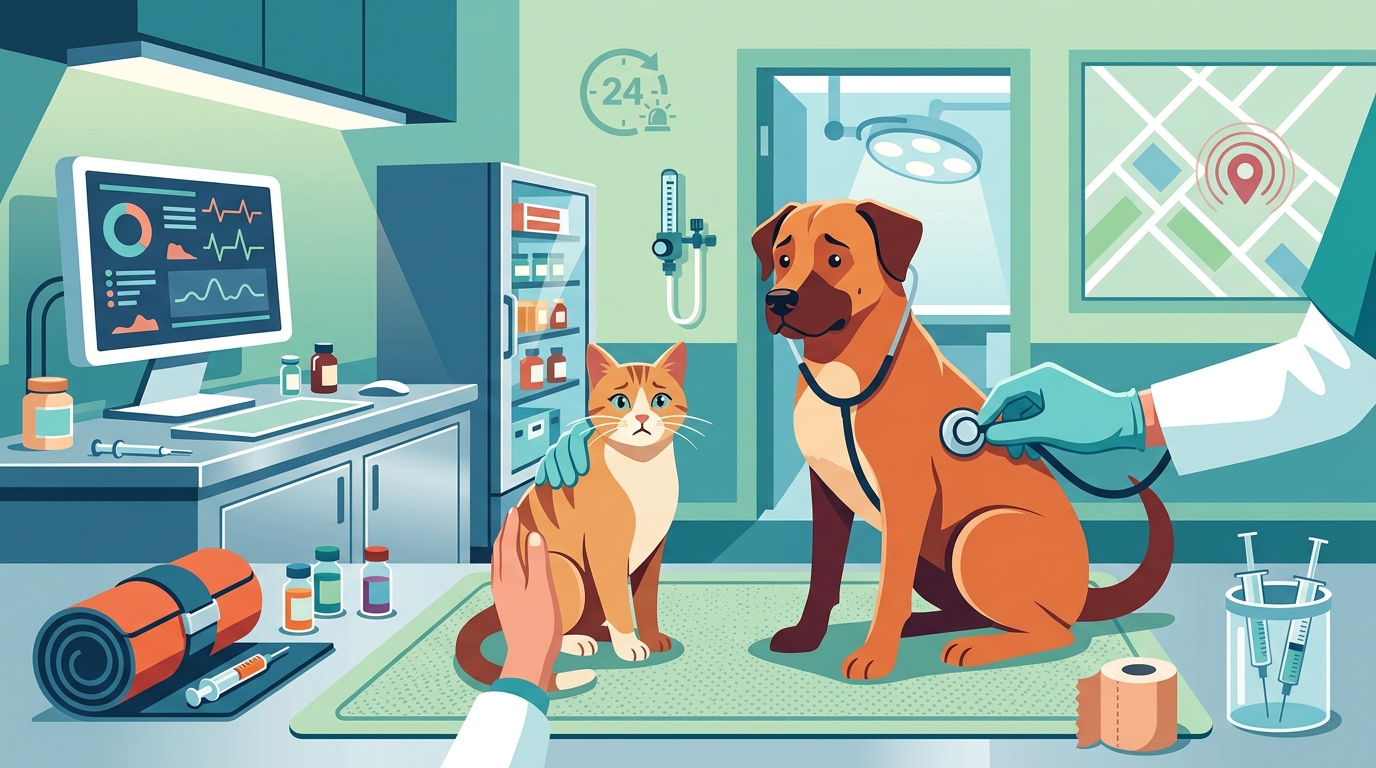
Seek emergency care immediately if your pet experiences difficulty breathing, uncontrolled bleeding, seizures, loss of consciousness, suspected poisoning, or severe trauma such as being hit by a car. The ASPCA Animal Poison Control Center helped over 232,000 animals in 2019, and poison-related calls surged 22% by 2021, exceeding 401,550 cases.
Urgent but Non-Critical Signs
Persistent vomiting, diarrhea lasting more than 24 hours, refusal to eat for over a day, limping, or eye injuries may also warrant urgent evaluation. In many cases, these can be addressed at a veterinary urgent care rather than a full emergency room.
When In Doubt, Call Ahead
Many emergency clinics have triage phone lines. A quick call can help you decide whether to come in immediately or wait for your regular vet in the morning.
How to Find a Trusted Emergency Vet Near You
Preparation is the best strategy. Searching for an emergency vet while your pet is in distress adds unnecessary stress. Here is how to plan ahead.
Use a Veterinary Search Platform
Platforms like Pawgrades let you search a database of over 18,000 veterinary clinics by location, specialty, and services offered. You can read reviews from more than 200,000 pet parents and compare clinics before you ever need one. Filter results by emergency or 24-hour availability to build a shortlist.
Check Reviews and Ratings
Transparent reviews are one of the most reliable ways to evaluate a clinic. Look for patterns in feedback about wait times, staff compassion, communication, and cost transparency. Browse Pawgrades reviews to see what real pet parents say about clinics in your area.
Verify Credentials
Confirm that the facility employs licensed veterinarians and, ideally, board-certified emergency specialists. You can check credentials through the American Veterinary Medical Association (AVMA) or your state veterinary licensing board.
What to Expect During an Emergency Vet Visit
Understanding the process reduces anxiety for both you and your pet. Most emergency hospitals follow a triage-based system, meaning the most critical patients are seen first, not necessarily those who arrived first.
According to an AVMA survey, 78% of pet owners needing emergency care were able to see a veterinarian within two hours, and nearly half waited less than one hour. Expect an initial assessment, diagnostic testing, a treatment plan discussion, and a cost estimate before major procedures begin.
Bring any medical records, a list of medications your pet takes, and details about the incident. Having this information ready speeds up the process significantly.
Emergency Vet Costs and How to Prepare
Emergency veterinary care is a significant financial consideration. An emergency exam alone can range from $100 to $300, while diagnostics, surgery, and overnight stays can push totals into the thousands.
| Service | Estimated Cost Range |
|---|---|
| Emergency exam fee | $100 - $300 |
| Blood work and diagnostics | $200 - $600 |
| X-rays / radiography | $150 - $400 |
| Ultrasound | $300 - $600 |
| Emergency surgery | $1,500 - $5,000+ |
| Overnight hospitalization | $600 - $2,000 per night |
| Poison treatment / decontamination | $250 - $3,000 |
A 2024 MarketWatch survey found that nearly 29% of pet owners said they could not pay for emergency care, and roughly 16% have lost a pet because they could not afford treatment. Pet insurance is one way to offset costs. Only about 7% of U.S. pets are insured, which means the vast majority of owners pay out of pocket.
How to Financially Prepare
Consider enrolling in pet insurance early, setting up a dedicated pet emergency savings fund, and asking your vet about payment plans. Many clinics partner with financing services like CareCredit or Scratchpay.
Emergency Vet vs. Urgent Care Vet
Veterinary urgent care is a relatively new concept in animal health, designed for non-life-threatening conditions that still need same-day attention. Understanding the difference helps you choose the right level of care and avoid unnecessary costs.
| Feature | Emergency Vet Hospital | Veterinary Urgent Care |
|---|---|---|
| Hours | 24/7, including holidays | Extended hours, not 24/7 |
| Cases treated | Life-threatening emergencies | Non-critical urgent issues |
| Cost | Higher ($300+ exam fees) | Moderate ($100-$200 exam fees) |
| Wait times | Triage-based, can be long | Generally shorter |
| Equipment | Full surgical suites, ICU | Basic diagnostics and treatment |
If your pet has a minor wound, mild vomiting, or a non-critical eye issue, an urgent care clinic may be the better and more affordable option. For severe trauma, breathing difficulty, or suspected internal bleeding, go directly to a 24-hour emergency hospital.
Key Takeaways
- Identify your nearest emergency vet before a crisis occurs by searching Pawgrades' database of 18,000+ clinics.
- 78% of pets needing emergency care are seen within two hours, according to AVMA data.
- Emergency vet visits can cost anywhere from $100 for an exam to over $5,000 for surgery and hospitalization.
- Pet insurance covers only about 7% of U.S. pets, leaving most owners to pay out of pocket.
- Know the difference between emergency vets (24/7, life-threatening cases) and urgent care vets (extended hours, non-critical issues).
- Always bring your pet's medical records and medication list to speed up emergency triage.
- Read verified reviews on Pawgrades to evaluate clinics on wait times, compassion, and cost transparency.
Frequently Asked Questions
How do I find an emergency vet near me right now?
Start by searching on Pawgrades, which lists over 18,000 veterinary clinics across the U.S. You can filter by location and emergency services. You can also call your regular vet's after-hours line, as many practices provide referrals to nearby emergency facilities.
What counts as a pet emergency?
A pet emergency is any situation where your animal's life or long-term health is at immediate risk. This includes difficulty breathing, uncontrolled bleeding, seizures, suspected poisoning, severe trauma, and inability to urinate.
How much does an emergency vet visit cost?
Costs vary widely. An initial emergency exam typically costs $100 to $300. Diagnostics, treatments, and surgeries can bring the total to several thousand dollars. Always ask for an estimate before authorizing treatment.
Is pet insurance worth it for emergencies?
Yes, pet insurance can significantly reduce out-of-pocket costs. Plans typically reimburse 70% to 90% of covered expenses after a deductible. Given that nearly 29% of owners report they cannot afford emergency care, insurance provides a valuable safety net.
What is the difference between an emergency vet and an urgent care vet?
An emergency vet operates 24/7 and handles life-threatening conditions. Veterinary urgent care is a service designed for non-critical issues that still need same-day treatment, typically at a lower cost and with shorter wait times.
What should I bring to an emergency vet visit?
Bring your pet's vaccination records, a list of current medications, details about what happened (including any substances ingested), and a form of payment. If possible, call ahead so the team can prepare.
Can I use Pawgrades to read reviews of emergency vet clinics?
Absolutely. Pawgrades features over 200,000 reviews from real pet parents. You can search for emergency clinics in your area, read detailed feedback, and even book appointments through the platform.
How long will I wait at an emergency vet?
Most emergency hospitals use a triage system. According to AVMA survey data, 78% of pets in emergencies were seen within two hours, and nearly half were seen in under one hour. Wait times depend on case severity and hospital volume.
Find Your Emergency Vet Today
Do not wait until a crisis to start searching. Visit Pawgrades now to find, compare, and save trusted emergency veterinary clinics near you. With 18,000+ clinics and 200,000+ reviews, you will have the confidence to act fast when your pet needs you most.