

Recent industry surveys indicate that over sixty percent of pet owners struggle to locate immediate care during off-hours. This data highlights the growing demand for accessible emergency veterinary services across all major metropolitan regions. Locating a reliable facility during these critical moments demands a systematic approach to verification and rapid response. Understanding how to evaluate clinic credentials and response times ensures your animal receives appropriate medical attention without delay.
Understanding Emergency Veterinary Care
Emergency veterinary care is specialized medical intervention designed to address life-threatening conditions or severe trauma outside standard business hours. Clinics operating around the clock maintain advanced diagnostic equipment and trained staff to manage critical cases. Recognizing the distinction between routine wellness visits and acute medical crises prevents dangerous delays in treatment. Pet owners should verify that a facility maintains active licensing and adheres to state-specific animal welfare regulations. This foundational knowledge establishes a baseline for evaluating local options effectively.
Identifying Qualified Facilities
Locating a trusted provider requires cross-referencing verified patient feedback with operational credentials. Modern review platforms aggregate thousands of clinic ratings to help owners compare service quality across different regions. You can browse verified patient reviews and compare local clinics directly through our centralized directory. Checking facility credentials before an emergency occurs drastically reduces decision fatigue during stressful situations. Many regional networks now publish detailed service portfolios that outline available diagnostic tools and surgical capabilities. Reviewing these resources ahead of time ensures you select a provider aligned with your pet specific medical requirements.
Evaluating Response Capabilities
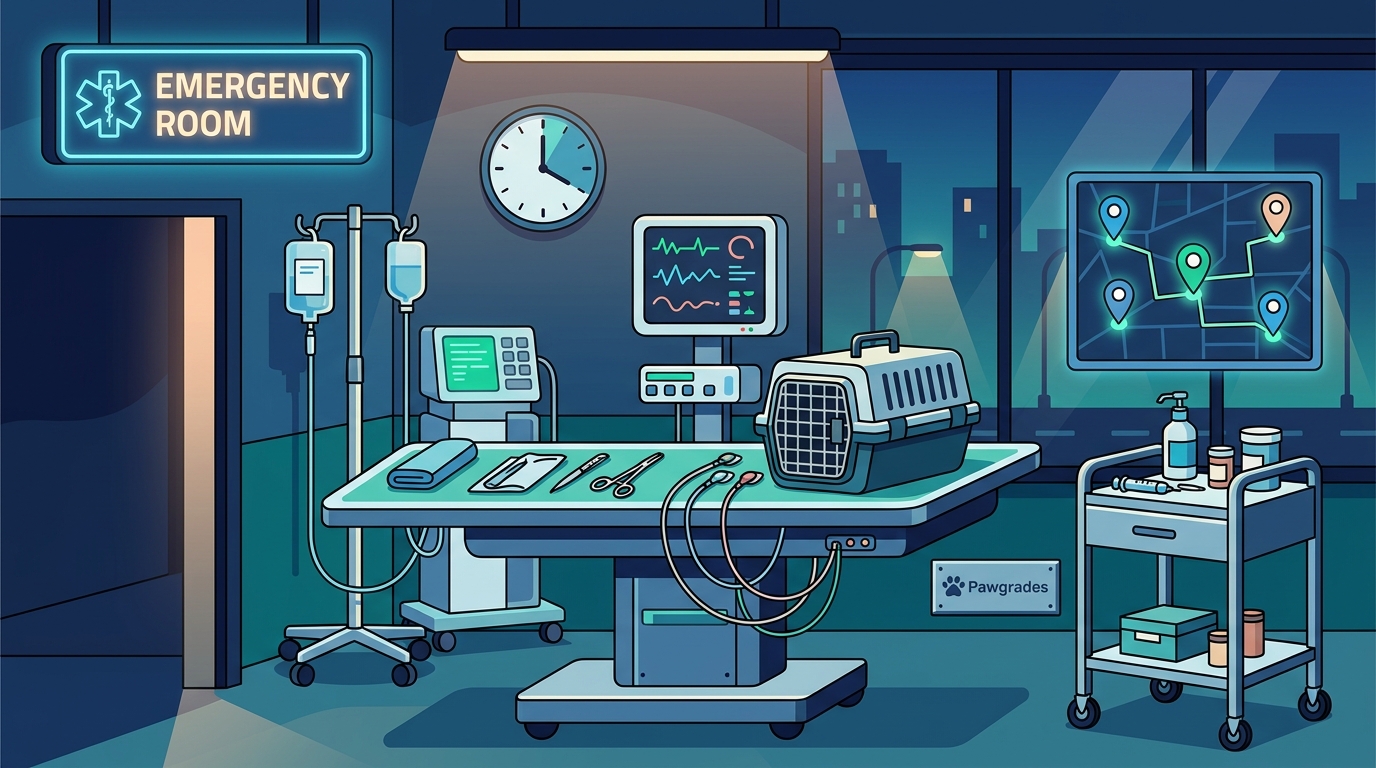
Rapid triage protocol is a standardized intake procedure that prioritizes critical cases based on physiological stability rather than arrival order. Top-tier facilities implement these protocols to manage acute trauma and sudden illness efficiently. Advanced monitoring systems track vital signs continuously while diagnostic imaging processes run concurrently. Assessing triage efficiency involves reviewing how quickly staff initiate stabilization measures upon patient intake. Clinics that publish their average response metrics demonstrate transparency and operational maturity. Prioritizing facilities with documented rapid intervention protocols significantly improves survival rates for acute trauma cases.
Comparing Service Models
Emergency care delivery varies significantly across different operational frameworks. Some centers operate as standalone facilities while others integrate directly with larger hospital networks. Regional directories often categorize clinics by specialty focus and geographic coverage radius. You can explore comprehensive state-by-state listings to identify providers matching your exact location parameters. Understanding operational boundaries prevents unexpected travel delays during critical medical windows. Facilities that maintain extended service hours typically invest heavily in specialized staffing and continuous equipment maintenance. Selecting a model that aligns with your geographic constraints ensures faster access when seconds matter.
Preparing for Urgent Visits
Proactive preparation transforms chaotic emergency scenarios into streamlined medical interventions. Owners should maintain digital copies of vaccination records, current medication lists, and previous diagnostic reports. Establishing a direct communication channel with your chosen facility before a crisis occurs saves valuable administrative time. You can claim your clinic listing to ensure accurate contact information and service details remain publicly accessible. Assembling a digital medical folder accelerates intake processing and reduces redundant questioning during high-stress moments. Many modern clinics now accept secure document uploads to streamline pre-arrival verification. This proactive approach directly correlates with faster treatment initiation and improved patient outcomes.
Key Takeaways
- Emergency veterinary care is specialized medical intervention designed to address life-threatening conditions or severe trauma outside standard business hours.
- Locating a trusted provider requires cross-referencing verified patient feedback with operational credentials.
- Rapid triage protocol is a standardized intake procedure that prioritizes critical cases based on physiological stability rather than arrival order.
- Emergency care delivery varies significantly across different operational frameworks.
- Proactive preparation transforms chaotic emergency scenarios into streamlined medical interventions.
- Facilities that maintain extended service hours typically invest heavily in specialized staffing and continuous equipment maintenance.
- Reviewing regional directories ahead of time ensures you select a provider aligned with your pet specific medical requirements.
Frequently Asked Questions
What defines an emergency veterinary situation?
An emergency veterinary situation is any medical condition that threatens life or limb without immediate professional intervention. Symptoms include severe bleeding, difficulty breathing, uncontrolled seizures, or suspected poisoning. Owners should never wait to observe these signs before seeking professional care.
How do I verify a clinic operates twenty-four hours?
Verification requires checking official facility websites, calling directly, or consulting centralized review aggregators. Many platforms publish real-time operational status updates to prevent unnecessary travel to closed locations.
What documents should I bring during an urgent visit?
Bring current vaccination records, medication lists, previous diagnostic reports, and proof of ownership. Digital copies stored on your phone or cloud storage prevent physical document loss during transit.
Do emergency clinics handle routine vaccinations?
Emergency clinics focus exclusively on acute medical crises and trauma management. Routine vaccinations and wellness exams belong to primary care practices that maintain standard scheduling.
How are emergency visit costs calculated?
Pricing structures typically include facility fees, diagnostic charges, and procedural costs. Transparent clinics provide detailed cost estimates before initiating non-critical diagnostic steps.
Can I schedule a pre-visit consultation?
Many facilities offer brief phone consultations to assess urgency and prepare intake teams. This step ensures your pet receives immediate attention upon arrival without administrative delays.
What happens if my pet arrives after hours?
After-hours protocols prioritize critical cases based on physiological stability rather than arrival order. Staff follow standardized triage matrices to allocate resources efficiently during peak demand periods.
Next Steps
Locating the right emergency care provider requires proactive research and verified credential checks. You can start your search immediately by accessing our centralized directory to compare top-rated clinics in your region. Visit our main platform to browse verified patient reviews and compare local clinics directly. Secure your pet safety today by establishing a relationship with a trusted facility before an emergency occurs. Visit Pawgrades to begin your search and secure reliable care for your animal companions.
| Service Category | Operational Focus | Typical Response Time | Recommended Use Case |
|---|---|---|---|
| 24 Hour Emergency Center | Life-threatening trauma and acute illness | Immediate triage upon arrival | Critical medical crises |
| Urgent Care Clinic | Non-life-threatening but time-sensitive issues | 15 to 30 minute wait | Minor injuries and infections |
| Primary Care Practice | Routine wellness and preventive medicine | Scheduled appointment slots | Annual checkups and vaccinations |
| Specialized Referral Hospital | Complex diagnostics and advanced surgery | Referral-based scheduling | Advanced surgical procedures |