

General practice veterinary care serves as the foundational pillar of pet longevity and wellness. According to recent industry data, the average pet owner visits a general practitioner four times annually for routine checkups, vaccinations, and preventive care. This consistent engagement is critical for early disease detection. Pawgrades has analyzed data from over 7,400 veterinarians across all 50 US states to identify the highest-performing clinics. This guide details how to evaluate these providers and locate top-rated care in your specific region. (Pet Health Blog amp)
Understanding General Practice Veterinary Care
General practice veterinary medicine encompasses the broad spectrum of routine health maintenance for companion animals. Unlike specialists who focus on cardiology, oncology, or surgery, general practitioners handle the majority of a pet's medical needs from puppyhood through senior years. This holistic approach ensures continuity of care and builds a comprehensive medical history for each animal. (Pawgrades Find Review Veterinarians)
General practice is defined as the branch of veterinary medicine that provides primary care for common health issues, preventive services, and initial diagnostics. It acts as the first point of contact for pet owners seeking advice on nutrition, behavior, and routine wellness. The scope of this practice includes core vaccinations, parasite prevention, dental cleanings, and routine blood work. By maintaining a centralized health record, general practitioners can identify subtle changes in a pet's condition before they become critical emergencies. (Pawgrades Find Review Veterinarians)
The importance of a trusted general practitioner cannot be overstated. Studies indicate that pets receiving regular preventive care from a dedicated general practice clinic live longer, healthier lives. These clinics often serve as the hub for coordinating referrals to specialists when complex conditions arise. Therefore, selecting a clinic with a strong general practice foundation is the most impactful decision a pet owner can make.
Key Selection Criteria for Top Clinics
Not all general practice clinics offer the same level of service or expertise. When evaluating potential providers, pet owners must look beyond basic availability and consider several high-signal factors. The best clinics combine clinical excellence with compassionate patient management.
Clinical Infrastructure and Technology
Modern general practice requires robust diagnostic capabilities. Top-tier clinics invest in digital radiography, in-house laboratory analyzers, and ultrasound technology. This infrastructure allows for rapid diagnosis of common issues such as foreign body obstructions, respiratory infections, and internal organ abnormalities. Clinics that perform diagnostics in-house reduce stress for pets by minimizing the need for multiple visits and external referrals.
Patient Review Volume and Rating Consistency
Verified patient reviews provide critical insight into the client experience. A high average rating is important, but review volume offers greater statistical significance. Clinics with hundreds of verified reviews demonstrate consistent service quality over time. Pawgrades tracks these metrics to help users identify providers with sustained excellence rather than temporary spikes in satisfaction.
Preventive Care Protocols
Excellent general practice clinics prioritize prevention over reaction. They offer structured wellness plans that outline recommended screenings based on a pet's age, breed, and lifestyle. These protocols often include annual heartworm testing, tick-borne disease screening, and senior blood panels for pets over seven years old. A clinic that actively promotes these protocols demonstrates a commitment to long-term animal health.
Regional Leaders in Veterinary Excellence
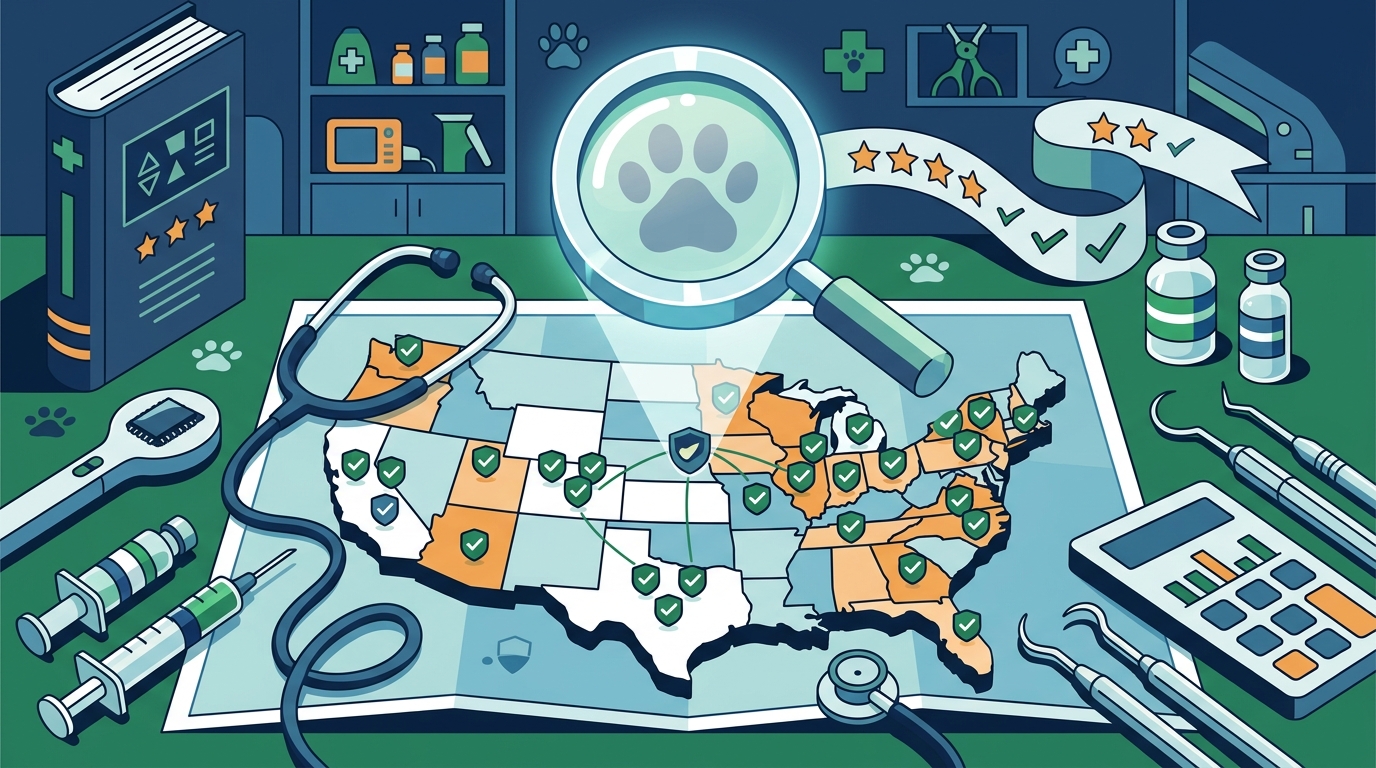
Veterinary care quality varies by region due to differences in provider density and local demand. Analyzing top performers by state reveals distinct hubs of veterinary excellence. California leads the nation with 820 veterinarians and 809 clinics, offering pet owners extensive choices. Texas follows closely with 671 veterinarians and 665 clinics, serving a rapidly growing pet population.
Florida ranks third with 618 veterinarians and 612 clinics. The high density of providers in these states often correlates with competitive pricing and specialized service offerings. However, states with lower provider density, such as North Carolina with 326 veterinarians, may require more diligent research to find top-rated general practice care. Pawgrades provides detailed city guides to help users navigate these regional differences effectively.
In major metropolitan areas like Atlanta, Georgia, the average rating for top clinics hovers around 4.6 stars. Providers in these hubs often handle higher patient volumes, which can impact wait times and appointment availability. Conversely, clinics in smaller cities may offer more personalized attention but fewer emergency resources. Understanding these regional dynamics helps pet owners set realistic expectations for their care experience.
Clinic Comparison Metrics
When comparing general practice clinics, it is essential to evaluate them against standardized metrics. The table below outlines the key performance indicators that distinguish top-tier providers from average practices.
| Metric | Top-Tier Clinic Standard | Average Clinic Standard | Why It Matters |
|---|---|---|---|
| Review Volume | 500+ Verified Reviews | Under 100 Reviews | Ensures consistent service quality over time. |
| Average Rating | 4.8 Stars or Higher | 4.0 to 4.5 Stars | Indicates high client satisfaction and trust. |
| In-House Diagnostics | Full Digital X-Ray & Lab | Basic Lab Only | Reduces stress and speeds up diagnosis. |
| Wellness Plans | Customized Tiered Plans | One-Size-Fits-All | Aligns care with specific pet needs and budget. |
| Emergency Access | 24/7 Partner Network | Referral Only | Ensures immediate care during critical events. |
Top-tier clinics often exceed these standards by offering telehealth consultations for minor issues. They also maintain transparent pricing structures, allowing pet owners to understand costs before treatment begins. This transparency is a hallmark of modern, patient-centric veterinary practices.
Key Takeaways
- General Practice Foundation: General practice is the primary source of routine health maintenance, vaccinations, and early disease detection for pets.
- Volume Significance: Clinics with over 500 verified reviews offer more statistically reliable service quality indicators than those with fewer reviews.
- Regional Density: California leads with 820 veterinarians, while Texas and Florida follow with over 600 providers each, offering extensive choice.
- Diagnostic Capability: In-house digital radiography and laboratory analysis are critical for rapid and accurate diagnosis of common conditions.
- Preventive Focus: Top clinics utilize customized wellness plans that adapt to a pet's age, breed, and lifestyle for optimal long-term health.
- Rating Standards: The average rating for top clinics in major hubs like Atlanta is approximately 4.6 stars, indicating high overall satisfaction.
- Search Efficiency: Using specialized platforms like Pawgrades allows users to filter by verified reviews and specific service capabilities.
Frequently Asked Questions
What defines a general practice veterinarian?
A general practice veterinarian is a medical professional who provides primary care for companion animals, including routine checkups, vaccinations, and treatment of common illnesses. They serve as the primary healthcare provider for pets throughout their lives.
How many reviews are needed to trust a clinic's rating?
While a high rating is important, a volume of at least 100 to 500 verified reviews provides a more reliable indicator of consistent service quality. Pawgrades prioritizes clinics with substantial review histories to ensure accuracy.
What is the average rating for top veterinary clinics?
In major metropolitan areas, top-rated general practice clinics typically maintain an average rating between 4.8 and 5.0 stars. These high ratings reflect consistent patient satisfaction and clinical excellence.
Why is in-house diagnostics important?
In-house diagnostics allow veterinarians to perform blood work, urinalysis, and digital X-rays immediately. This reduces the time required for diagnosis and minimizes stress for the pet by avoiding multiple trips to external laboratories.
How do I find the best vet in my state?
You can use specialized directories like Pawgrades to browse veterinarians by state. These platforms aggregate verified reviews and clinic data to help you compare providers in your specific region.
What should I look for in a wellness plan?
A comprehensive wellness plan should be customizable to your pet's specific needs, including age-appropriate screenings, parasite prevention, and nutritional guidance. It should also offer transparent pricing for routine services.
Do general practitioners handle emergencies?
While general practitioners manage urgent care during business hours, they typically refer critical emergencies to specialized 24-hour veterinary hospitals. Top clinics maintain strong partnerships with emergency facilities for seamless referrals.
Find Your Ideal Vet Today
Selecting the right general practice clinic is a critical step in ensuring your pet's long-term health. By evaluating providers based on review volume, diagnostic capabilities, and preventive care protocols, you can make an informed decision. Pawgrades offers a comprehensive database of verified clinics across all 50 states. Browse top-rated veterinarians in your area today to find the perfect care provider for your furry friend.