

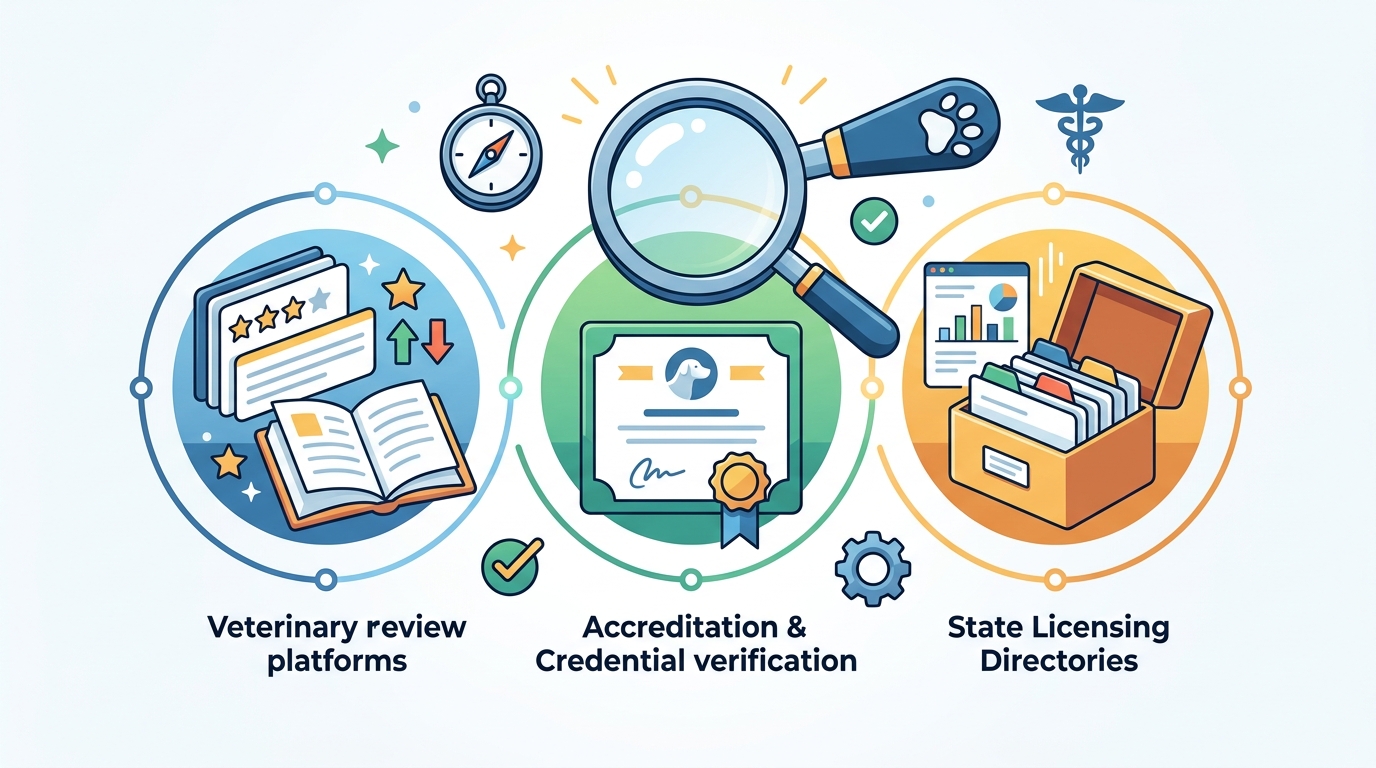
Use dedicated veterinary review platforms, accreditation directories, and credential verification tools to find the best clinic for your dog. This guide explains how to evaluate these three resource types, compare their strengths, and apply them to your specific pet care needs. We will cover how to read reviews critically, verify board certifications, and use state licensing data to make an informed decision. For additional details, review the Pet Health Blog Veterinary.
Veterinary Review Platforms
How to Read Reviews Effectively
Do not rely solely on the average star rating. A 4.5-star clinic with 50 reviews is statistically different from a 4.5-star clinic with 500 reviews. Look for patterns in the written comments. Frequent mentions of "wait times," "billing transparency," or "staff attitude" are more useful than a single high or low score. On Pawgrades search, you can filter by rating to see how consistent a clinic's performance is over time.
The Role of Verified Reviews
Verified reviews indicate that the reviewer actually used the service. This reduces the risk of fake or biased feedback. When browsing best veterinarians by state, note which reviews are marked as verified. These often contain more specific details about the clinical environment and the vet's communication style.
Accreditation Directories
Accreditation directories are official registries maintained by professional veterinary organizations. These directories list clinics that have met specific standards for facility safety, staff training, and animal welfare. Unlike review platforms, accreditation is a binary status: a clinic is either accredited or it is not.
Why Accreditation Matters for Dogs
Accreditation signals that a clinic adheres to strict protocols for anesthesia, surgery, and emergency response. For dogs requiring complex procedures, such as orthopedic surgery or oncology treatment, choosing an accredited facility reduces risk. You can cross-reference a clinic's name with national accreditation bodies to confirm their status. This step is crucial because not all clinics pursue accreditation, even if they provide excellent care.
State Licensing vs. National Accreditation
State licensing is the legal minimum requirement to practice veterinary medicine. National accreditation is a voluntary, higher standard. A clinic may be fully licensed by the state but not accredited by a national body. When using browse by state tools, you can identify the volume of clinics in your area. High-density areas often have more accredited options, giving you more choices for specialized care.
Professional Credentials Verification
Professional credentials verification is the process of confirming a veterinarian's education, board certifications, and disciplinary history. This step ensures that the doctor you are hiring has the specific expertise your dog needs. It moves beyond general reputation to individual professional standing.
Understanding Board Certification
Board certification is a post-graduate credential that indicates a veterinarian has completed advanced training in a specific specialty, such as cardiology or dermatology. Not all specialists are board-certified, but board-certified specialists have passed rigorous exams. When looking for a specialist for your dog, verify their certification through the relevant college of American Veterinary Specialists. This verification is distinct from general practice experience.
Checking Disciplinary History
State veterinary medical boards maintain public records of disciplinary actions against licensed veterinarians. Checking these records is a critical safety step. You can search for a vet's name in your state's board database to see if there have been complaints or sanctions. This information is not always displayed on review platforms, making direct verification essential for peace of mind.
Comparison of Resource Types
| Resource Type | Primary Data Source | Best For | Limitations |
|---|---|---|---|
| Review Platforms | Pet owner experiences | General practice, customer service, wait times | Subjective, potential for bias |
| Accreditation Directories | Professional standards bodies | Facility safety, complex procedures | Not all clinics are accredited |
| Credential Verification | State boards and specialty colleges | Specialist expertise, disciplinary history | Does not reflect daily customer service |
Each resource type serves a different purpose. Review platforms tell you about the experience, accreditation tells you about the standards, and credential verification tells you about the individual doctor's qualifications. Using all three provides a complete picture.
Key Takeaways
- Use review platforms to assess customer service and general satisfaction, but look for patterns rather than single ratings.
- Check accreditation directories to ensure the facility meets high safety standards, especially for surgical or emergency care.
- Verify individual veterinarian credentials through state boards and specialty colleges to confirm expertise.
- State licensing is the legal minimum; national accreditation is a voluntary higher standard.
- Board certification indicates advanced training in a specific veterinary specialty.
- Cross-referencing all three resource types provides the most comprehensive view of a clinic's quality.
- Use emergency vets directories to identify 24/7 care options in your area.
- Always check for verified reviews to reduce the impact of fake or biased feedback.
Frequently Asked Questions
What is the difference between a licensed vet and a board-certified vet?
A licensed vet has met the state's legal requirements to practice. A board-certified vet has completed additional post-graduate training and passed exams in a specific specialty, such as surgery or internal medicine.
How many reviews should a clinic have to be considered reliable?
There is no fixed number, but clinics with at least 50 to 100 reviews provide a more statistically significant picture of their performance than those with only a handful.
Can I trust all reviews on veterinary platforms?
No. Look for verified reviews and read the content for specific details. Be wary of reviews that are overly generic or lack specific dates and pet names.
Where can I find a vet for exotic animals?
Use specialty filters on review platforms to find clinics that list exotic animal care as a service. Not all general practice clinics treat exotic pets.
Is accreditation required for all veterinary clinics?
No. Accreditation is voluntary. However, it is a strong indicator of a clinic's commitment to high standards of care and safety.
How do I verify a vet's disciplinary history?
Search for the veterinarian's name in your state's veterinary medical board database. These records are public and list any complaints or sanctions.
What should I look for in a review of a dog clinic?
Look for comments about the vet's communication style, the cleanliness of the facility, and how they handle anxious or aggressive dogs. These details are often more useful than the star rating alone.
Are online reviews the same as in-person experiences?
Not always. Online reviews reflect the reviewer's specific experience. Your experience may vary based on the specific vet you see and the time of day you visit.
Conclusion
Choosing the best clinic for your dog requires a multi-step approach. Start with Pawgrades to find highly rated clinics in your area. Then, verify the clinic's accreditation status and the individual veterinarian's credentials. By combining these three resource types, you can make a confident, informed decision about your pet's care. Visit Pawgrades today to begin your search for the perfect vet.